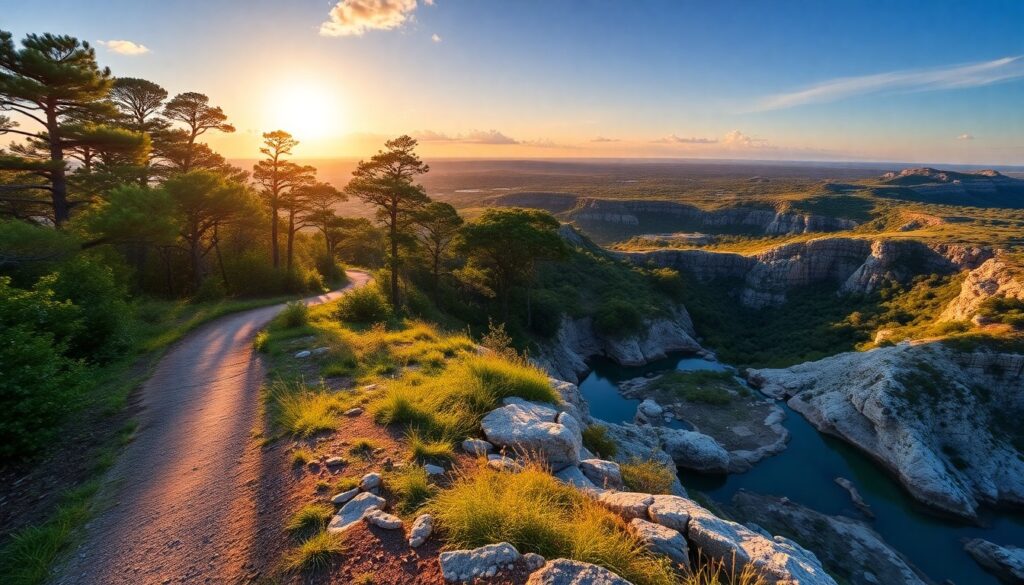
Imagine standing at the edge of an ancient sand pine scrub, the air thick with the scent of pine needles warmed by the South Florida sun, and a gentle breeze rustling through the unique dwarf oaks. This is the immersive world that awaits you on the Jonathan Dickinson Kitching trail system, a true gem nestled within Hobe Sound. Here, the landscape unfolds in a mesmerizing palette of greens and browns, inviting you to explore a remarkably diverse ecosystem often overlooked in the rush of coastal life.
Trail Specifications
Trail Name: Kitching Creek Loop (within Jonathan Dickinson State Park)
Location: Hobe Sound, FL
Distance: Approximately 4.7 miles (loop)
Elevation Gain: Minimal (approx. 30-50 feet)
Difficulty: Easy to Moderate (due to length and sun exposure)
GPS Coordinates: 26.9995° N, 80.1221° W (Kitching Creek Canoe Launch Trailhead)
Best Season: Fall, Winter, Spring
Dog-Friendly: Yes, on leash
Route Overview & Natural Highlights
The Kitching Creek Loop offers an unparalleled journey through some of Florida’s most unique habitats. As you traverse the trail, you’ll find yourself immersed in the rare sand pine scrub, an ecosystem characterized by its ancient dunes and fire-dependent flora. Here, sand pines reach for the sky, while beneath them, communities of scrub oak and saw palmetto form dense thickets. This arid environment, surprisingly rich in biodiversity, is home to the federally threatened Florida scrub-jay, which you might spot flitting between branches. The sandy terrain underfoot is a constant reminder of the geological history of the region, formed by ancient marine deposits and shifting sands.
Beyond the scrub, the trail transitions into mesic flatwoods, where taller slash pines dominate and the ground becomes a mosaic of wiregrass and gallberry. Keep your eyes peeled for evidence of the gopher tortoise, a keystone species whose burrows provide refuge for hundreds of other animals. The geological story of this area is fascinating; the underlying limestone bedrock, sculpted over millennia, influences the water flow and plant communities. A highlight of the route is the scenic Kitching Creek itself, a tributary of the wild and scenic Loxahatchee River, offering glimpses of cypress trees draped in Spanish moss and the potential to spot wading birds like herons and egrets, or even an alligator sunning on the banks. The creek’s dark, tannin-stained waters reflect the lush canopy, creating moments of serene beauty.
The elevation changes are subtle but noticeable for Florida, with gentle rises and dips that hint at the park’s past as a series of coastal dunes. While not mountainous, the varied topography provides a welcome change from the flatlands, particularly near the park’s highest point, Hobe Mountain, which stands at a modest 86 feet but offers panoramic views of the surrounding preserve. This blend of ecosystems, from dry scrub to lush creek edges, makes the Jonathan Dickinson Kitching experience a truly comprehensive exploration of South Florida’s natural heritage.
Turn-by-Turn Trail Breakdown
Trailhead Start: Into the Scrubland
Your journey begins at the Kitching Creek Canoe Launch trailhead, easily accessible from the park’s main road. The initial segment plunges you directly into the unique sand pine scrub. The path here is generally wide and sandy, shaded intermittently by the tall, slender sand pines. Listen for the distinct calls of the Florida scrub-jay and watch for their quick movements among the low-lying scrub oaks. You’ll pass interpretive signs detailing the ecology of this fire-dependent habitat, giving you a deeper appreciation for the landscape you’re exploring.
Mid-Trail Features: Creek Views and Pine Flatwoods
As you continue, the trail veers towards Kitching Creek, offering stunning views of its tranquil waters. Here, the ecosystem shifts, becoming more verdant with cypress and other water-loving trees. You might encounter small wooden bridges crossing minor tributaries. This section provides excellent opportunities for birdwatching; keep an eye out for ospreys soaring overhead or kingfishers diving for prey. The path then transitions into mesic pine flatwoods, characterized by a more open canopy of slash pines and a ground cover of wiregrass. This is a prime area to spot gopher tortoise burrows, often identifiable by the fan-shaped mound of sand at their entrance.
Destination & Return: The Loop’s Embrace
The Kitching Creek Loop doesn’t have a single “summit” in the traditional sense, but the point where you gain the best views of the creek or traverse the most diverse habitats serves as its climax. As you complete the loop, the trail gently guides you back towards the trailhead, offering a final perspective on the varying landscapes you’ve just traversed. The return leg often feels familiar yet new, as the light shifts and reveals different details. You’ll re-enter the sand pine scrub, completing your immersion in this remarkable environment, feeling refreshed and connected to Florida’s wild heart.
Seasonal Guide & Best Times
- Spring (March – May): Pleasant temperatures, with migratory birds passing through. Wildflowers begin to bloom, adding splashes of color to the scrub and flatwoods. Humidity is lower than summer, making for comfortable hiking.
- Summer (June – August): Hot and humid, with frequent afternoon thunderstorms. This is the least popular time for hiking, but the landscape is lush and vibrant. Early morning hikes are advisable to beat the heat and avoid rain. Insect activity is higher.
- Fall (September – November): Transition period with gradually decreasing temperatures and humidity. Excellent time for hiking as conditions become more comfortable. Wildlife activity increases as the heat subsides.
- Winter (December – February): The absolute best time to visit. Cool, dry weather provides ideal hiking conditions. Wildlife is most active, and the lack of humidity makes for clear skies and comfortable exploration.
Essential Gear & Safety
- Water: Carry ample water, especially during warmer months. There are no water sources on the trail.
- Sun Protection: Hat, sunglasses, and sunscreen are crucial due to extensive sun exposure in open scrub areas.
- Insect Repellent: Mosquitoes and other biting insects can be present, particularly near the creek and during humid seasons.
- Appropriate Footwear: Sturdy closed-toe shoes are recommended for the sandy and sometimes uneven terrain.
- Navigation: A map or GPS device is helpful, although the trail is generally well-marked. You can find more details and maps on AllTrails.
Getting There & Parking
Jonathan Dickinson State Park is located at 16450 SE Federal Hwy, Hobe Sound, FL 33455. From I-95, take Exit 87A (SR-714 East) or Exit 87 (SR-714 West) and follow signs. The park entrance is clearly marked on US-1. Upon entering the park, follow the main road past the ranger station. You will turn right towards the Kitching
Curated Literature & Miami Downtown Calendar
The Architecture of Focus: Deep Work & Modern Mastery
By Founders Library Press
A structured framework for strategic clarity, productivity, and authentic execution.
Upcoming Downtown Happenings
Live acoustic sessions, gallery receptions, literary salons, and independent trade shows across Miami.
