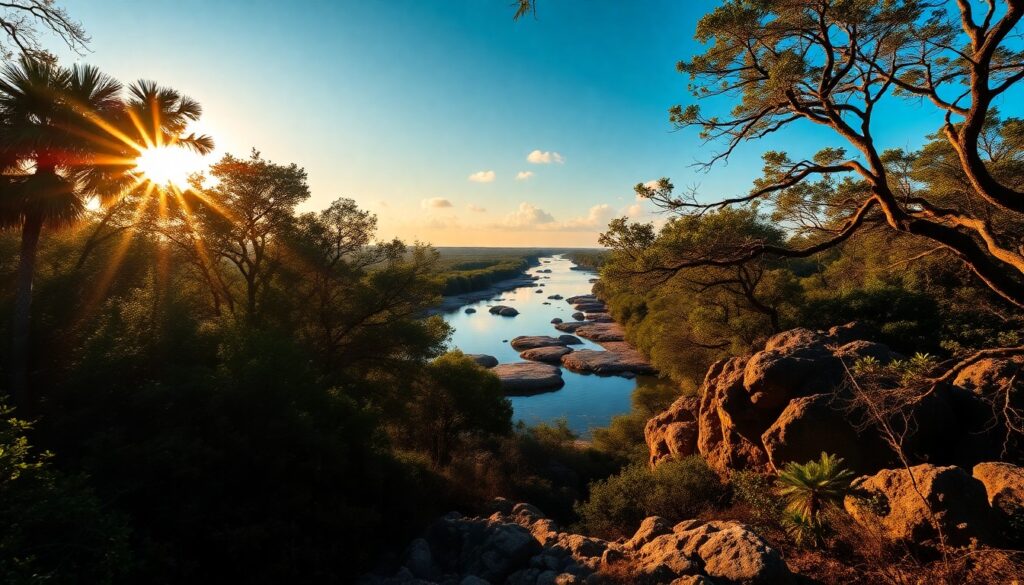
As you step onto the boardwalk, the air immediately shifts, cooling with the shade of a dense, emerald canopy. The distinctive, earthy scent of saltmarsh and damp soil rises to meet you, a rich perfume carried on a gentle breeze from the nearby Oleta River. Here, amidst the intricate network of prop roots and breathing tubes, the Oleta River Mangrove Trail unfolds, inviting you into a world where land and sea converge in a mesmerizing display of ecological resilience. You are about to discover one of Miami’s most serene and ecologically significant escapes, a true urban oasis.
Trail Specifications
Trail Name: Oleta River Mangrove Trail
Location: Oleta River State Park, North Miami, FL
Distance: Approximately 3.5 miles (main loop/network)
Elevation Gain: Minimal (less than 20 feet)
Difficulty: Easy
GPS Coordinates: 25.9080° N, 80.1245° W (Park Entrance)
Best Season: Fall, Winter, Spring
Dog-Friendly: Yes, on leash in designated areas (check park rules)
Route Overview & Natural Highlights
The Oleta River Mangrove Trail guides you through a unique coastal hammock and estuarine ecosystem, a vital nursery for marine life and a natural buffer against storms. The terrain is predominantly flat, featuring a mix of paved paths, compacted shellrock, and elevated boardwalks that preserve the fragile environment beneath. As you navigate these paths, you’ll find yourself immersed in a dense forest dominated by three primary mangrove species: the red mangrove, easily identifiable by its distinctive arching prop roots; the black mangrove, with its pencil-like pneumatophores protruding from the mud; and the white mangrove, typically found further inland, often displaying salt crystals on its leaves. You might also spot buttonwood trees, close relatives of mangroves, adding to the botanical diversity.
Geologically, the area is underlain by ancient limestone bedrock, characteristic of South Florida, which influences the shallow, brackish waters that define this habitat. The Oleta River, a serpentine waterway flowing into Biscayne Bay, is a constant presence, offering glimpses of its calm surface between breaks in the foliage. Keep your eyes peeled for wildlife: manatees often seek refuge in the river’s warm, protected waters, while bottlenose dolphins may make an appearance near the river mouth. The skies are patrolled by osprey and various wading birds such as great blue herons, snowy egrets, and roseate spoonbills, especially during migratory seasons. On the muddy banks, fiddler crabs scuttle, and various fish species dart through the clear shallows, showcasing the rich biodiversity that thrives within this critical ecosystem.
Turn-by-Turn Trail Breakdown
Trailhead Start: Entering the Mangrove Embrace
Your journey begins near the park’s main office or one of the designated trail access points, often marked by interpretive signage detailing the history and ecology of the area, including the indigenous Tequesta tribe who once thrived here. The initial segments are typically wide, paved, or shellrock paths, allowing for an easy entry into the shaded canopy. The air immediately cools, and the sounds of the city fade, replaced by the gentle rustle of leaves and the distant calls of birds. You’ll quickly encounter the first dense stands of red mangroves, their intricate root systems creating a maze both above and below the water, a natural fortress against erosion.
Mid-Trail Features: River Views and Hidden Coves
As you progress, the trail often transitions to elevated boardwalks, allowing you to walk directly above the tidal flats and shallow waters without disturbing the delicate ecosystem. These sections offer unparalleled views into the heart of the mangrove forest. Look down to spot small fish and crabs navigating the tangled roots. Several side paths or small clearings may lead to scenic overlooks of the Oleta River, where you can watch kayakers paddle silently by or catch a glimpse of a manatee surfacing for air. The trail winds gently, occasionally opening up to reveal wider expanses of the river, especially as it approaches the area near Haulover Inlet, where the river meets the bay.
Summit/Destination & Return: A Full Circle of Serenity
While there isn’t a traditional “summit” on this flat trail, the furthest points of the loop offer the deepest immersion into the natural surroundings, often culminating in expansive river views or quiet coves perfect for reflection. As you complete the loop and begin your return, the perspective shifts slightly, revealing new details you might have missed on the outbound journey. The light filters differently through the canopy, highlighting the unique textures of the mangrove leaves and the shimmering patterns on the water. The return path often circles back through slightly different sections of the forest, providing a comprehensive experience of this remarkable coastal habitat before you emerge back into the park’s more developed areas, refreshed by your journey.
Seasonal Guide & Best Times
- Winter (December – February): This is arguably the best time to visit. Temperatures are mild (60s-70s°F), humidity is low, and mosquitoes are minimal. Wildlife viewing, especially of manatees, is excellent as they seek warmer waters.
- Spring (March – May): Pleasant temperatures (70s-80s°F) and moderate humidity make spring a wonderful time. Migratory birds are active, and the foliage is lush. Insect activity begins to pick up towards late spring.
- Summer (June – August): Expect hot, humid conditions (80s-90s°F) with frequent afternoon thunderstorms. Mosquitoes are most prevalent. Early mornings are your best bet to avoid the heat and storms. Despite the heat, the park is still beautiful.
- Fall (September – November): Temperatures gradually cool (70s-80s°F), and humidity decreases. This season can still bring tropical storm activity, so check the weather forecast. Early fall still feels like summer, but late fall offers increasingly comfortable conditions.
Essential Gear & Safety
- Water: Bring plenty, especially during warmer months. Hydration is key in Florida’s climate.
- Sun Protection: Hat, sunglasses, and reef-safe sunscreen are essential, even under the canopy.
- Insect Repellent: Highly recommended year-round, especially during summer and after rain.
- Comfortable Shoes: Closed-toe shoes are best for walking on varied terrain.
- Binoculars: Enhance your wildlife viewing experience, particularly for birds and distant marine life.
- Stay on Designated Trails: Protect the sensitive ecosystem and yourself.
- Check Weather: Afternoon thunderstorms are common in summer; plan accordingly.
- For more detailed information and trail maps, visit the Oleta River State Park AllTrails page.
Getting There & Parking
Oleta River State Park is conveniently located in North Miami, easily accessible from major roadways. Input “3400 NE 163rd St, North Miami Beach, FL 33160” into your GPS. Upon arrival, you will encounter a ranger station. Florida State Parks typically charge a nominal entrance fee per vehicle (usually
Curated Literature & Miami Downtown Calendar
The Architecture of Focus: Deep Work & Modern Mastery
By Founders Library Press
A structured framework for strategic clarity, productivity, and authentic execution.
Upcoming Downtown Happenings
Live acoustic sessions, gallery receptions, literary salons, and independent trade shows across Miami.
